I, and many others, appreciate the genuine interest and concern Vancouver journalist Kerry Gold has displayed in writing about the destructive aspects of the Broadway Plan. She has now written several articles about the failings of the plan, from the perspective of residents of more affordable rental buildings, and now property owners in the neighbourhood.
I hope you will read this article. But before doing so, I would like to elaborate on my concern with the city's requirement that 20% of the units be affordable. After all, this would seem most reasonable and important.
The problem is that the suites being designed for low-income families and individuals are often just awful. The city is giving away millions of dollars by waiving Development Cost Levies, yes millions, in order to get these suites included.
Before you read the story below about the havoc the Broadway Corridor Plan proposals are creating, and what other respected voices have to say about the completely inapporpriate urban planning aspects of the plan, take a look at this floor plan for a lower income households in the building described in this story.
This is a three bedroom family suite. As a former CMHC social housing architect I can tell you that this layout, designed by the respected architectural firm of MCM, formerly Musson Cattell Mackie, is not livable. It does not even meet code. There isn't a coat closet. There are no bedroom closets; there is no washer or dryer, (although the developer says there is a European-style washer/dryer in the kitchen). The kitchen is so tiny, the kitchen sink is right next to the stove, which is illegal, and I can't see adequate space for a dishwasher. Can you? Any of you?
CORRECTION. Kerry Gold and I previously wrote that the city's record of comments related to this development included the following comment from architect Peter Busby: "The proposal is ludicrously out of proportion to the neighbouring buildings, and an offence against common sense urban aesthetics."
We are now advised that the architect Peter Busby did not write this. It may have been another Peter Busby or someone pretending to be Peter. Kerry Gold and I apologize to Peter for being duped by this comment as found in the City's record of correspondence. A copy of an email exchange between the City and Peter can be found at the end of this post.
Why does this building look like Bentall Centre?
Frank Musson, a gentleman I highly respect was the architect for the 1970's Bentall Centre. I mention this since this building seems like a bulky, 1970's building dropped into a lovely, tree lined residential street full of duplexes and single-family houses.The developer and city planner both assured city council that the existing street trees would be kept.
Will the existing trees be kept as promised by the developer and staff?
However, if you look at this drawing you'll see the existing street trees are gone. Instead they are replaced by some smaller trees. And if you look even closer, you'll see the shadows from the sun assume the sun is in the north. Why, because the developer doesn't care and the city staff are too busy to notice these things.MCM should be ashamed of itself for allowing this building design and drawing to be released to the public
At the public hearing for this project a structural engineer who lives nearby says it will be impossible for the developer to save the existing trees. Why? Because it will not be possible to safely erect a crane to construct the building without taking out the trees.
What I don't understand is why the Mayor and sensible members of Council aren't demanding more of their staff when it comes to projects like this. Why are they allowing them? I suspect it is just to get the 20% below market units.
The mayor says he wants to do the right thing.
On Tuesday morning I was at a breakfast with the mayor, who, along with Trevor Ford, his Chief of Staff assured those of us present that the city really does care. about the community and doing the right thing. If this is the case, I hope city politicians and staff give us some answers.
Will the existing street trees be kept?
Will the building be completely redesigned so that the below market unit sizes are all increased and made livable?
Will some effort be made to ensure this building is redesigned to fit in better with the street?
And finally,
Since there are more than 10,000 rental units currently being contemplated along the corridor, why doesn't the city impose a moratorium on new projects at places like 1st and Yew and the streets like West 14th and 15th, far away from Broadway? Why not focus new buildings along Broadway and the streets immediately to the north and south, and around transit?
As one of my critics wrote on Twitter, why pay attention to an affluent old man like me, with old-fashioned planning ideas, when I'll be dead when the plan is being implemented?
I would suggest the real question should be why am I speaking out and alienating staff and members of Council, (one of whom recently told a mutual colleague that "I think Geller is losing it" when I will be dead when the plan is being implemented?
The answer is because I care about this city, and as I was quoted in the 500 Dunsmuir story, (prviously posted on this blog) the city council has become so obsessed with doing what they think is right to create more affordable housing, they are disregarding the things that made Vancouver such a special place to live in recent years.

W

Jennifer Irvine purchased her Kitsilano duplex on Vancouver’s west side eight years ago, but now that her neighbours have assembled their properties to develop an 18-storey tower, she says her leafy picturesque street is undergoing a new form of blockbusting.
Last fall, a company called Havn Development obtained a rezoning permit on behalf of three property owners with a proposal to build a 170-unit rental tower with podium at 2156-2172 W. 14th Ave., between Yew and Arbutus streets. The site currently consists of a detached house and two duplexes, but the city has plans to create a second downtown for the low- to mid-density neighbourhoods within the 500-block Broadway Plan. That includes the approval of high-rise towers in the middle of quiet side streets.
“At this stage, when the fear happens, people just go, ‘Okay, I guess that’s it. I’m out,’” said Ms. Irvine, a retired city hall employee. “I’m not ready. I knew I was going to leave this place, but I assumed I would when I wanted to, and I would sell it to somebody who really wanted to live here. I’m not ready.”
Unlike lower forms of density, the prospect of high-rise towers sends a ripple of fear that is uprooting neighbourhoods. Thousands of renters in the Broadway Plan are being displaced by proposed redevelopment of their older buildings, while homeowners are planning to leave for their own reasons.
The W. 14th Avenue project, critics say, is an example of how the new blockbusting works. It starts when a homeowner decides to cash out to an investor or developer, often at a premium and then neighbours must decide whether to endure years of construction and living adjacent to a tower – or also sell and move on. The resident living near the tower might see their home lose value, unless they too can become part of an assembly. But there is a limit on the number of towers per block, so not everyone can get in on the tower action.
“If by virtue of their location they are not able to sell their property for a similar tower development … the value will go down,” said developer, real estate consultant, urban planner and retired architect Michael Geller, who’s in favour of high-rises but is adamantly opposed to the W. 14th proposal. His concern is as a planner; he lives outside the Broadway Plan.
“If another tower is permitted on the adjacent lots, and their lot could be part of an assembly, it might increase. But generally, a tower next door or even across the lane will likely reduce the value if the property is likely to stay as a single-family house or duplex.”
Ms. Irvine said her street has become more divisive, and she questions if the stress will be worth it. Will truly affordable housing be the result? Havn Development has two other rezonings within the Broadway Plan area, all remarkably similar, but the company has no track record of previous developments, which has made some wonder if they are planning to flip the property.
Adrian Lai, of Havn Developments, said they intend to apply for a development permit this year and follow through with construction. He said they have no intention to sell the site.
”As a developer we have done some smaller scale projects. This would be the first sort of large multifamily project that we have done. But just because we are new doesn’t mean we don’t have the ability to execute,” he said.
”I do sympathize with the people in the neighbourhood – it’s a big change. I’d probably feel the same way if I were in their shoes,” said Mr. Lai. “But we are following the Broadway Plan. We are not doing anything not permitted within the Broadway Plan.”
Council approved the project despite considerable public pushback.
Architect Peter Busby called the proposal “ludicrously out of proportion to the neighbouring buildings,” and “an offence against common sense urban aesthetics.” He argued that the building should be limited to six storeys.
Former Vancouver mayor and B.C. premier Mike Harcourt said the plan is “totally inappropriate and out of scale to this fine old neighbourhood.”
Aimee Gabor is a retired realtor whose lane backs onto the W. 14th proposal, and her daughter lives next door to the tower project. Ms. Gabor and her husband hope to stay in their duplex with their grandchildren down the alley. But she said there’s a sense that busting up the neighbourhoods might be an intended consequence.
“The city wants to increase density, which is wonderful, but they didn’t consult us about what would fit in because they don’t want us to live here. They want us out,” she said. “This is the plan for pushing out the people from this beautiful neighbourhood, to push them out and build another [neighbourhood] like the north side of the False Creek,” she said, referring to the downtown area packed with skyscrapers. “That is what they want to turn Kitsilano into.”
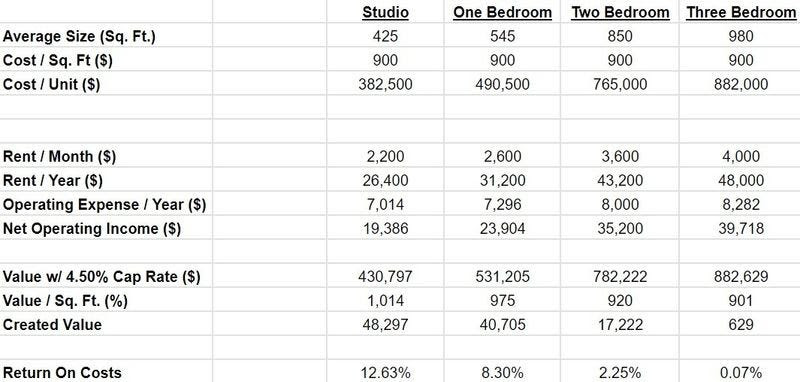
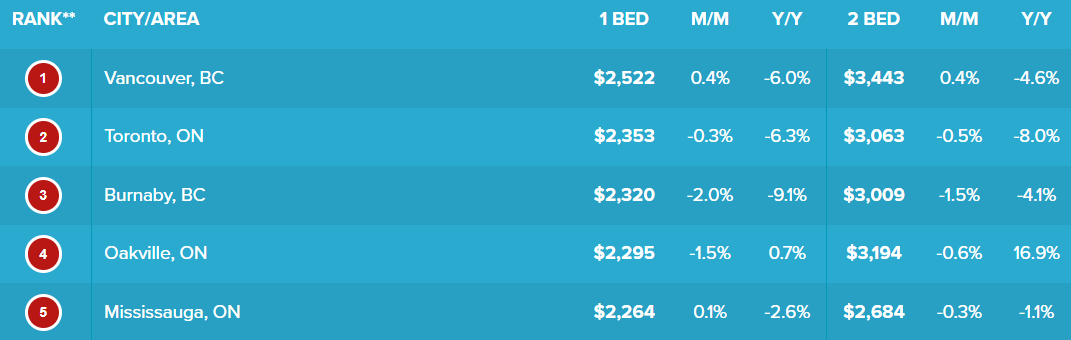
Mr. Geller is calling for a moratorium on side street towers two blocks outside Broadway. The middleman that assembles properties and flips them only drives up prices, which won’t result in affordability for the end-user, he said. Market rents for new purpose-built apartments are about $5.50 per square foot, or $2,200 for a 400-square-foot unit.
He also criticizes the city policy that requires 20 per cent below-market housing because the other 80 per cent usually subsidizes those units, which makes those market-rate rentals expensive and drives up the rents for the area. Politicians are approving poorly designed buildings just to get the 20 per cent below market rental units, he said.
Filmmaker David Fine, an Oscar winner who’s making a documentary about the Broadway Plan displacements, has become a community organizer.
“No one is saying, ‘don’t build towers anywhere,’ but [instead] there should be a process for building out from transit and adding considerable densification in these areas.
“But why are people and their opinions and views completely meaningless to the city?” he asked.
“I think there is a school of thought that says, ‘if we can drive people out of their homes and build towers instead, then the city is better off, because we are building more density, and you can double property taxes.’
“I just feel it’s a cruel way to develop a city … and the social fabric is not being respected in any way.”
Email exchange re: Peter Busby comment.